When looking at different programs that specialised in sculpting and modelling, I decided to try out a brush. This was to see if I could make models of my drawings. The program had been recommended to me by a friend, who described it as a better way to make character models, with better sculpting settings than Blender. If I found the sculpting satisfying, it would become a part of my proposal.
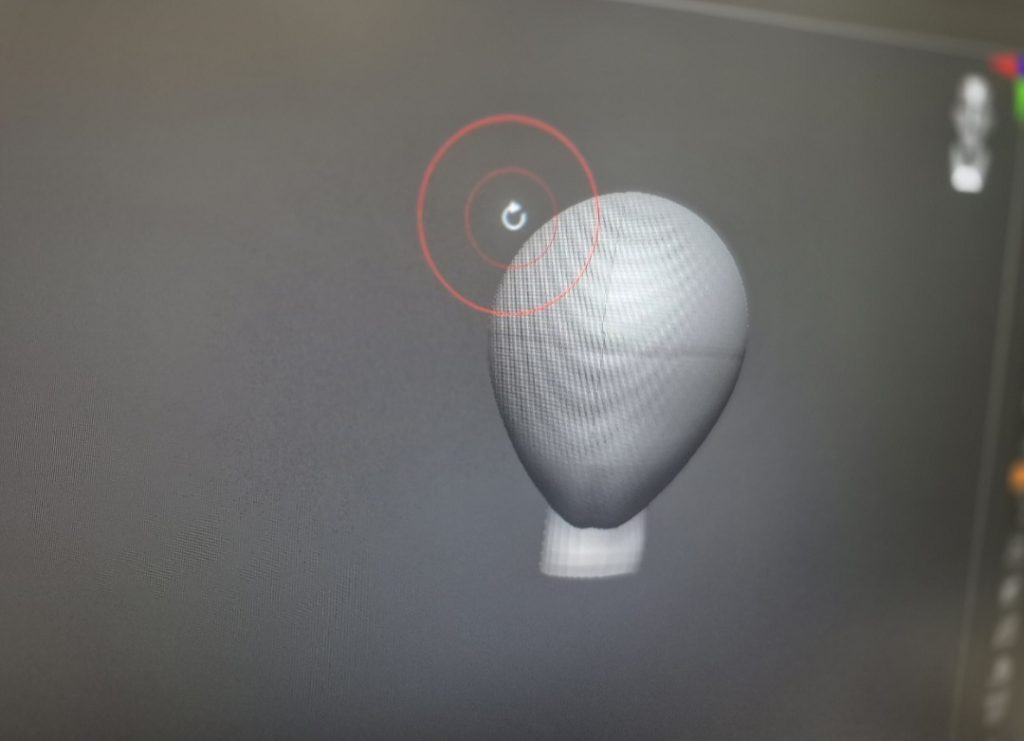
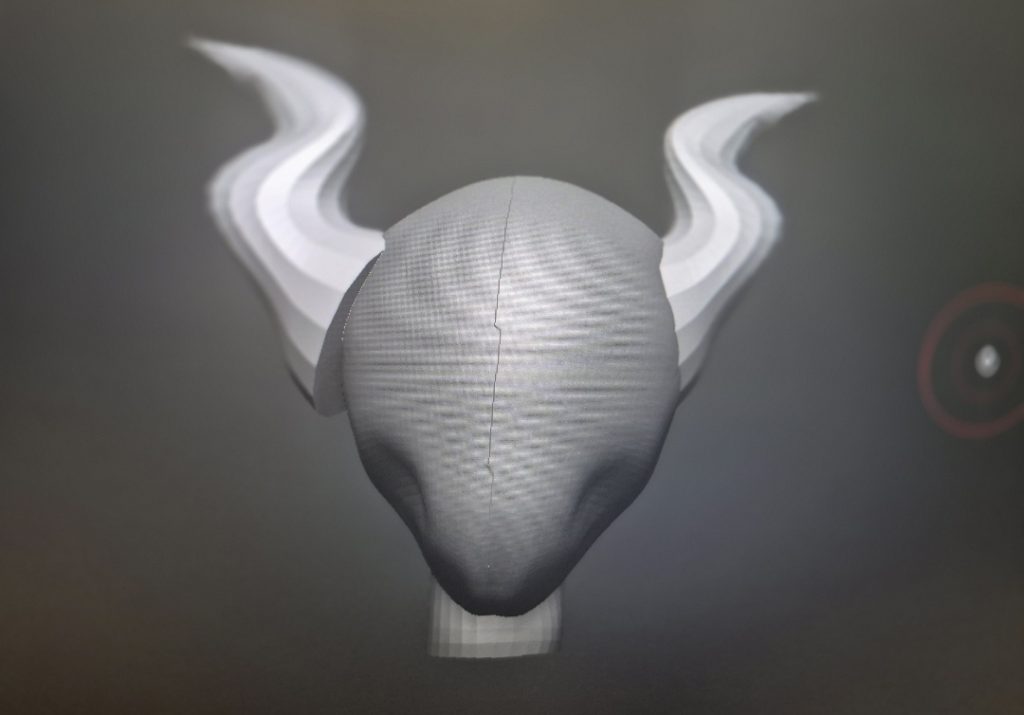
After watching a few videos on how to edit models, I began sculpting the head of a character, one I had drawn in my own time. While I chose this character for personal reasons, it gave me a good understanding of the programs many tools and traits. After experimenting with the basic face sculpting, I started adding extra details like horns. This led to me learning about the mirror tool, which helped simplify the process.
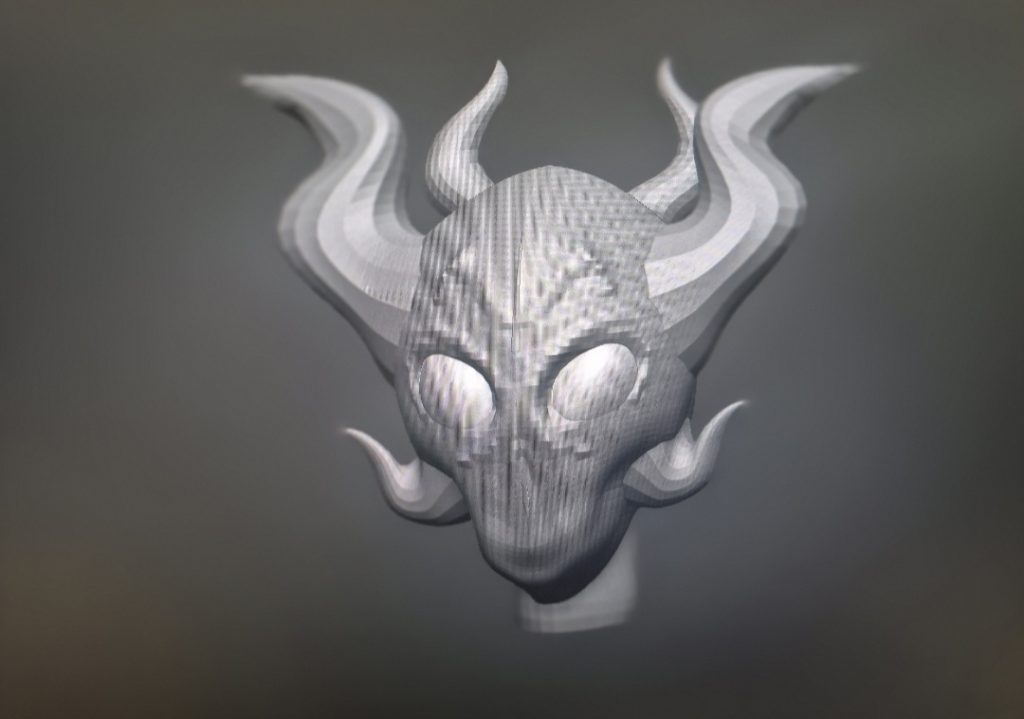
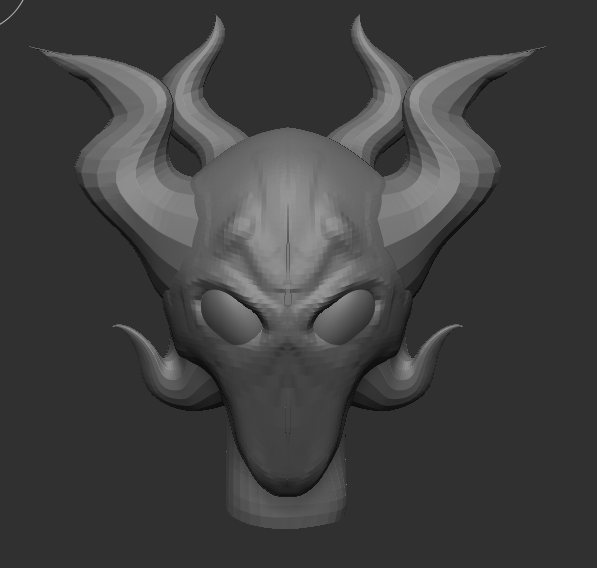
After adding more horns to get a better understanding of the mirror mechanic, along with how different shapes react to different tools, I finished creating the head. I then exited the program for the day, unaware of how Zbrush would save the file. Zbrush saved files as 2.5D images, meaning the model I had made was now incapable of being edited and changed.
While I was fairly taken aback by this, I still believe the experiment led to a greater understanding of the site and how a basic model could be made. In the future, I would experiment more with making a body as I feel that is an unexplored area.
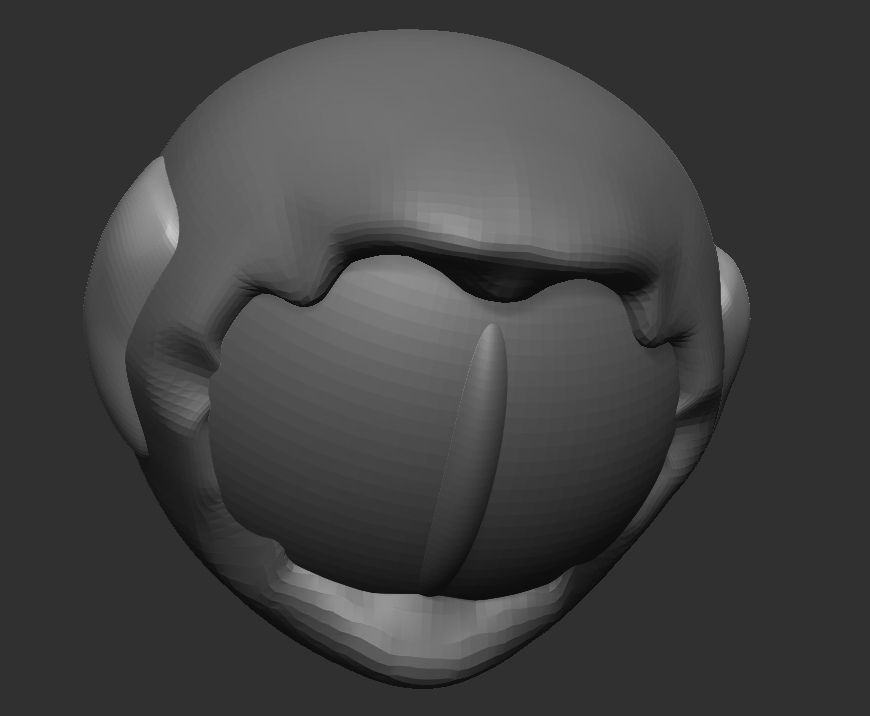
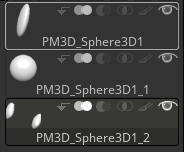
To end off my experimentation, I made a simpler model based on a sketch I made. The first thing I did was to save the file properly so I could open and edit it again. Once I had made sure I knew of this, I began testing the limits of how much a model could be pulled and stretched. This character was originally drawn with tentacle like arms. Upon trying to sculpt it however, I found the process would need a lot more practise and knowledge into the software. Or perhaps a different program would achieve this effect.
Overall, I believe Zbrush should be used in my proposal. My own talents align with the program and I believe it can be incorporated into my end product in some form. I believe the talent of taking something 2D and transforming it into 3D is something I would love to look further into.
These character models could either be used to tell a story in some way, or be presented and used more as statues and inanimate objects in a relaxed environment. This all depends on the direction I take my project, but I believe it would be worthwhile to explore further nonetheless.
Afterwards, we were recommended to try out Open Brush, as to get an idea of what creating art in VR felt like. Unlike other apps and sites, this program used your hands directly when creating a drawing, following the position in 3D space.
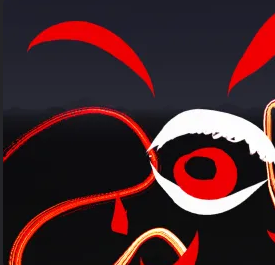
After a quick introduction to the program, I drew an eye to get a feel for the controls and tools on offer. I quickly learnt the difference that drawing in a 3D space really meant, as what I drew immediately had more depth than I was expecting. Nevertheless, I decided to try out some of the other tools to see how far I could go.
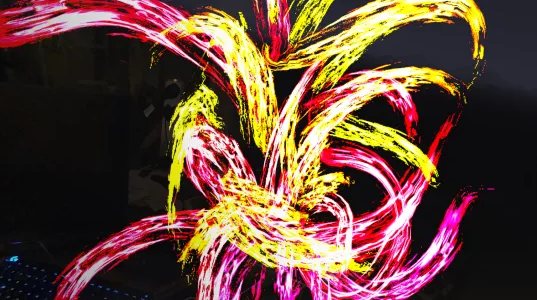
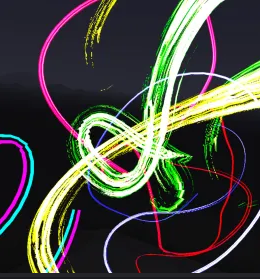
Upon using the 3D space to its full advantage, along with other brushes such as the fire, rainbow, neon, etc, I found that Open Brush could make beautiful effects and pillars of art. This was with an ease that Blender or Zbrush lacked in areas. Because of this, the lines drawn flow more freely around each other and have a very whimsical quality to them.
Overall, I found myself loving Open Brush. The task we were given was a lot easier compared to previous sites, as there were less rules to follow, while getting a feel for the brushes. It may not be as good at sculpting and modelling 3D objects like Zbrush, but the effects that could be added on top of or next to said models with Open Brush, are next to none. I could see myself using this for my overall project thanks to the freedom it offers.