When doing research for my final major project, I started by looking through the media I had consumed and had an interest in. This would give me a good start in seeing how the design of a series can help tell a story to influence people.
When translating stories to different media, or interpretating them into a new story, the most important factor is design. And a lot of media uses already made story to help tell their own story and messaging. The biggest tales interpretated into different media is that of mythology and religion. However, I decided to pick a game as my main example for research.
The game, Ultrakill, made by Arsi “Hakita” Patala, follows the quest of a robot journeying into Helll to kill all of its residents for blood, and an angel questioning his own existence. It is very influenced by: Greek Mythology, Christianity, and most importantly, The Divine Comedy; specifically Dante’s Inferno. The story presents interesting questions about human nature, faith, war and existentialism. Because of this, the design needs to balance the story, and interpret designs with years of other interpretations.
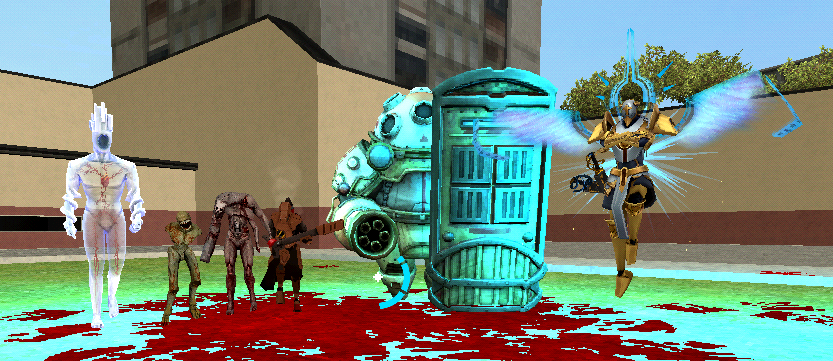
My favourite example of this is in one of the design choices. Very few characters are designed with eyes, or have them purposefully covered up and hidden. This serves a purpose not just in the story, but in making all the designs stand out against other media. This choice then stays with people, making them remember your story and game more as a result.
This choice to include a rule that benefits both the story and the design has influenced my own work in many ways. Through it, I have made sure each idea I have has a different theme in the design that stays consistent while helping it stay unique, whether that be in character design, or even in branding.
Beyond design, the style of a piece of media can also influence how a person views it. Some pieces of media are remembered purely for their style and how they commit to it, no matter how weird it is. Along with this, the style is an important factor in how characters and a world a designed, as a style cannot work if it isn’t designed around.
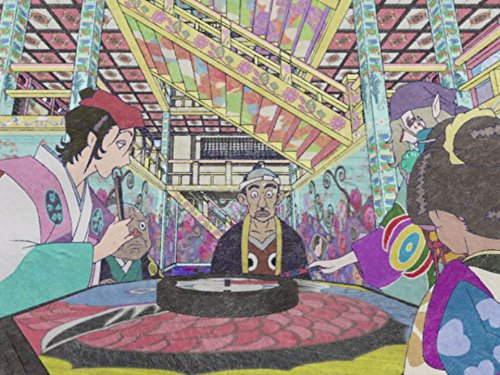
My example of style is an anime called Monoke, produced by Toei Animation, and specifically directed by Kenji Akamura. The series is very based on Japn’s many supernatural tales, specifically creatures called the Monoke. Because of its influence, the style is very reminiscent of the art from Japan’s edo period. The world itself is drawn as if the very paintings themselves could move.
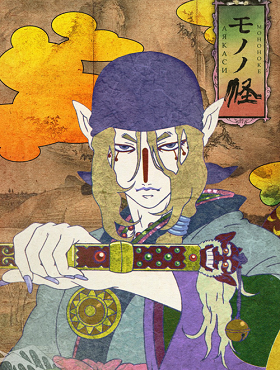
The characters and world are intrinsically designed to match the supernatural feel. Most of the spirits take on forms that would only work in an animated form, along with surreal imagery. Because of the style they chose, the series still lives on today despite having a niche fanbase. This is because of the unique style it chose to capture.
After looking through how character and world design has influenced the media I love, wtach and play, I decided to begin looking for other case studies, that spoke about storytelling through character and world design. This would give me a better insight into what I would go on to create for my final major project.
I first found a case study/post called ‘The Art of Storytelling in Design’, on the site, Medium, by a User Experience Designer, Kanyinsola (Their real name is not present on the site). While not exactly character design, I feel that looking into how storytelling in design can also help understand the process. The case study goes into how storytelling can help sell products, along with building empathy with consumers. They later go into the specifics, such as how icons, colour and typography communicate with the viewer, like how “Color conjures up feelings of fervor, spirituality, solemnity, tranquility, life, vitality, and the earth and sky.”
While the case study doesn’t align completely with my end product, it’s still important to understand how storytelling impacts every part of design and a brand, which will help with the later stages if I were to turn my story into an actual product. However, it would be best to find something that alligned with my own project in some form.
After thorough searching, I found another case study, once again on the site: Medium. The Magic of Character Design in Storytelling, written by the user: Parfair’s Palette. There are multiple parts to the case study. The first part goes into visual storytelling through characters, talking about angles, colours, and tones. For example, how “using rounded shapes and designs often feel friendly and approachable, while sharp angles may suggest danger and authority.” Afterwards, they go into ‘Personality-Driven Character Design‘, along with ‘Designing Memorable Characters Through Evolution‘. Both of these give helpful advice on designing a character to match their personality, but also how changing it can showcase progression in a character arc. They end with saying ‘Why This Works‘, In their own words, “The magic of character design in storytelling lies in its ability to bridge art and emotion. Audiences may forget specific plot points, but they rarely forget characters who feel alive.”
I believe this case study perfectly captures what I want to convey in my project, and the importance of character design in a story. I feel any person looking into character design should give it a read to get a basic idea on the many factors at play in a character design. Overall, I’d say it gave me an idea of how to convey my own ideas and story, through simple mediums in the design.
Summary
The research I did gave me a clear understanding of how character design and world design play an important part in a product and story. Not only does it provide an identity, but it can also add onto the message of the story itself, making it last in the mind of the customer. This is showcased best in the two examples I showcased, Ultrakill and Mononoke, as each showcase incredible stories, made memorable through the design of its characters and the world in which they exist within.
Along with this, my research into case studies gave me a much better understanding of how these elements are created in the first place, through the art of using different angles, shapes and colours to describe a character, before anything is told to the customer. It helps the story itself come across to the audience, but also showcases a level of respect to them, trusting in the media literacy of the audience themselves.
The skills and lessons I’ve specifically took from this are:
- Colour theory in storytelling
- How to create memorable designs
- Expressing personality within design
- The creation of a unique and memorable identity
I feel that all of these skills will help me in the multiple stages of my project, as I begin creating each page of my zine and how the story will be showcased throughout. Along with this, it will help me to find an identity for the zine itself, so that it may stand on its own.
References
Ultrakill. (2020). PC [Game]. Oceanside, CA: New Blood Interactive.
Nakamura, K. 2007. “Mononoke” [Anime]. Tokuma Shoten, July 12th
Kanyinsola (2022). The Art of Storytelling in Design. [online] Medium. Available at: https://medium.com/@kanyindesigned/the-art-of-storytelling-in-design-dfe54c839608 [Accessed 22 Mar. 2026].
Parfait’s Palette (2025). The Magic of Character Design in Storytelling. [online] Medium. Available at: https://parfaitspalette.medium.com/the-magic-of-character-design-in-storytelling-3460d8f5d36f. [Accessed 22 Mar. 2026].